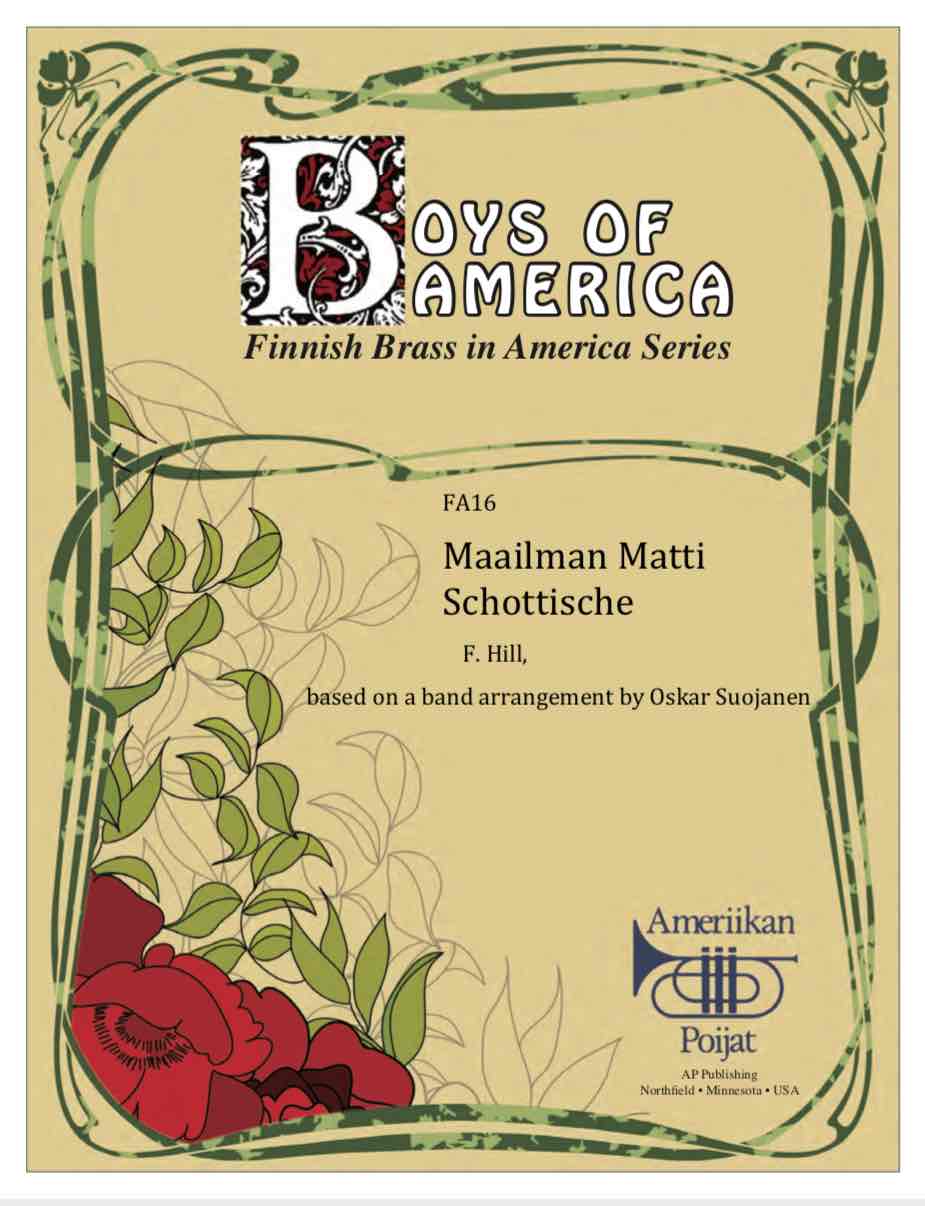
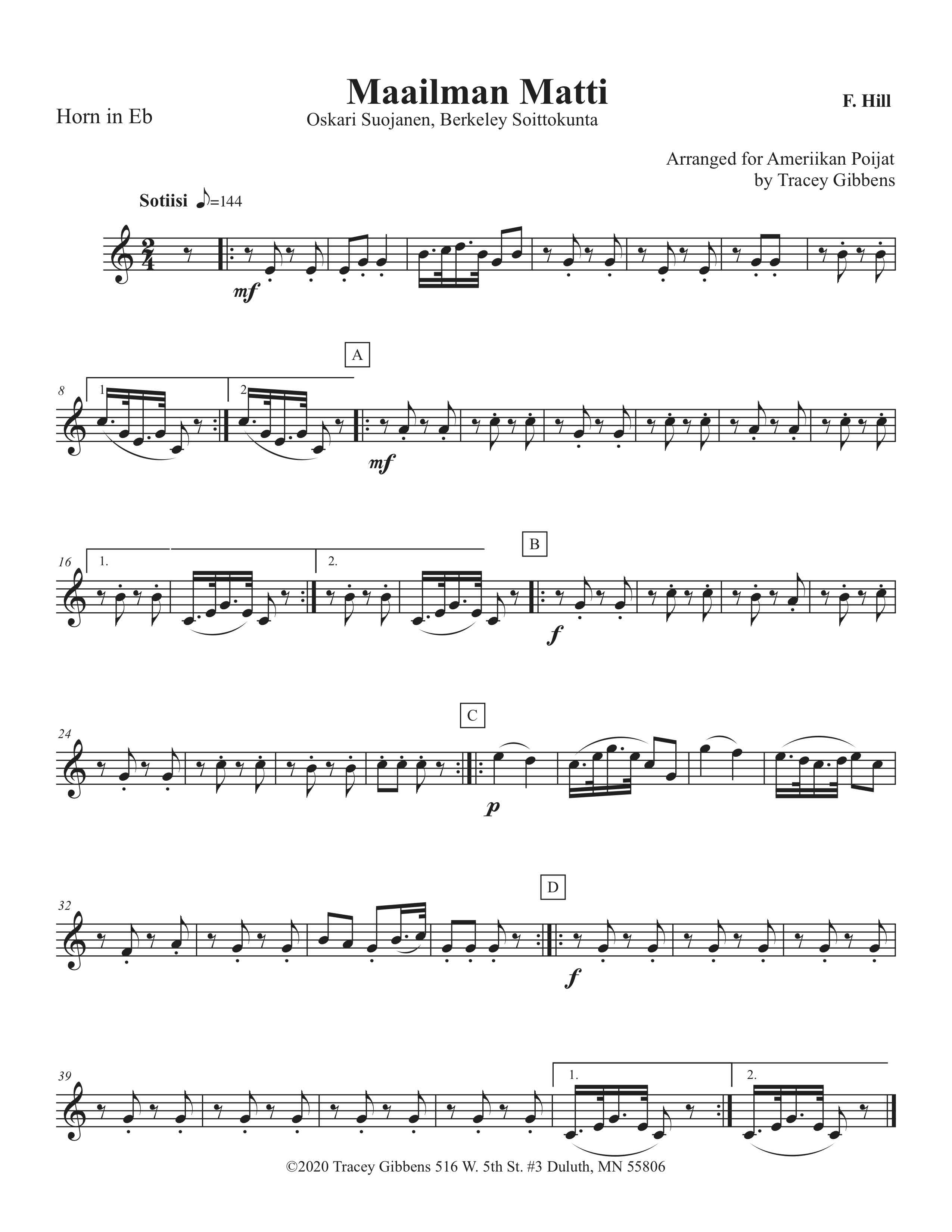
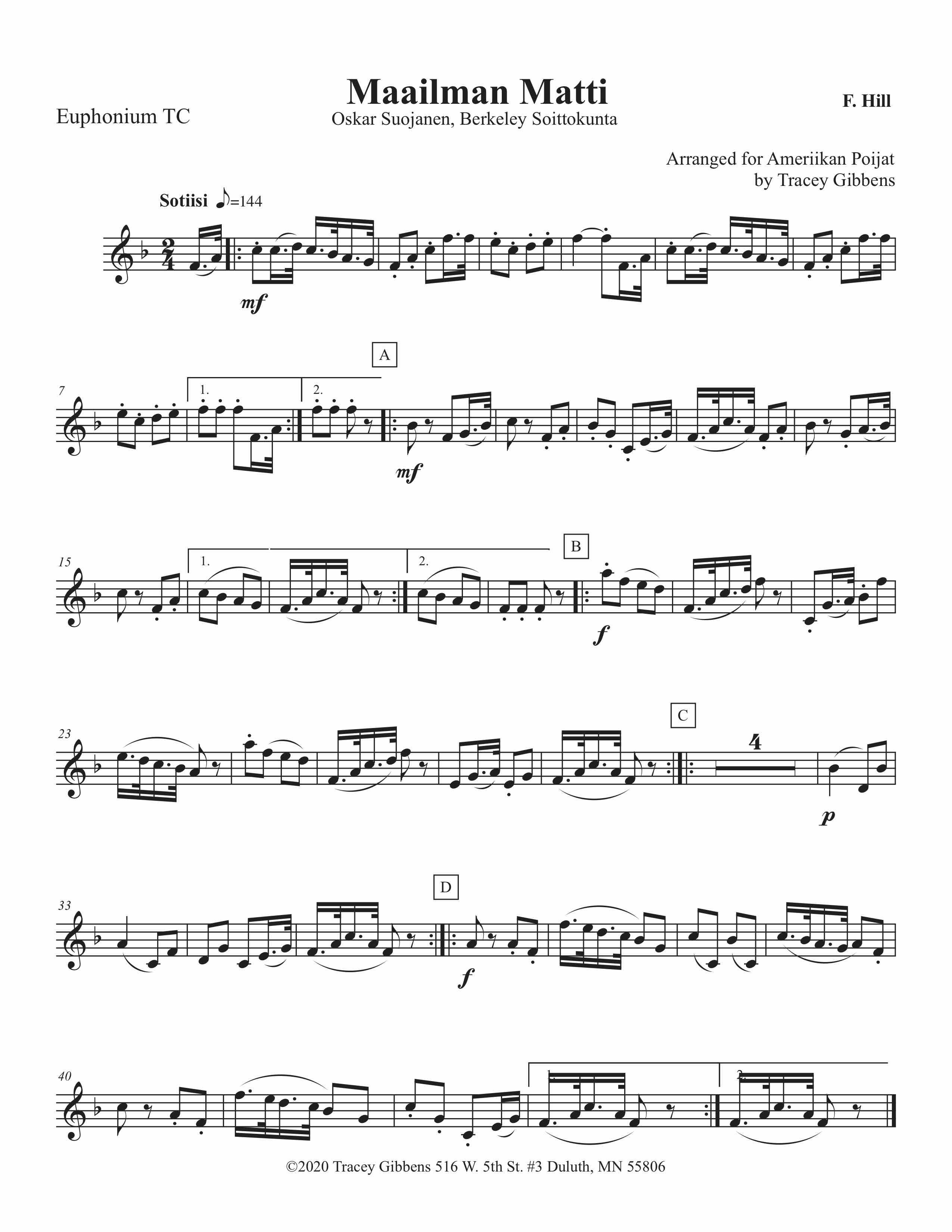
Maailman Matti - Jenkka/Schottische
Maailman Matti- Jenkka/Schottische is one of the most popular dance tunes among Finnish Americans and was recorded by several popular singers and bands. It’s source in unknown. It has a romantic theme to the lyrics – young love: “My sweetheart’s (Heilani) house it is on the lake and is painted red. I go there night or day, and the doors are open. Heilani’ s room is covered with silk. I go night or day, and the coffee is brewed. American fleece leggings, and use the backs to turn, turn, turn. The girl said to the boy, that we would hug now, now, now. I am a Matti, Man of the World. I’m that singer Matti. I have gold in Kuopio and in Kajaani too. Can't be a dad, can't be a mom, do not mourn the dried flower. For this young boy has to go, in the mind of the world.”
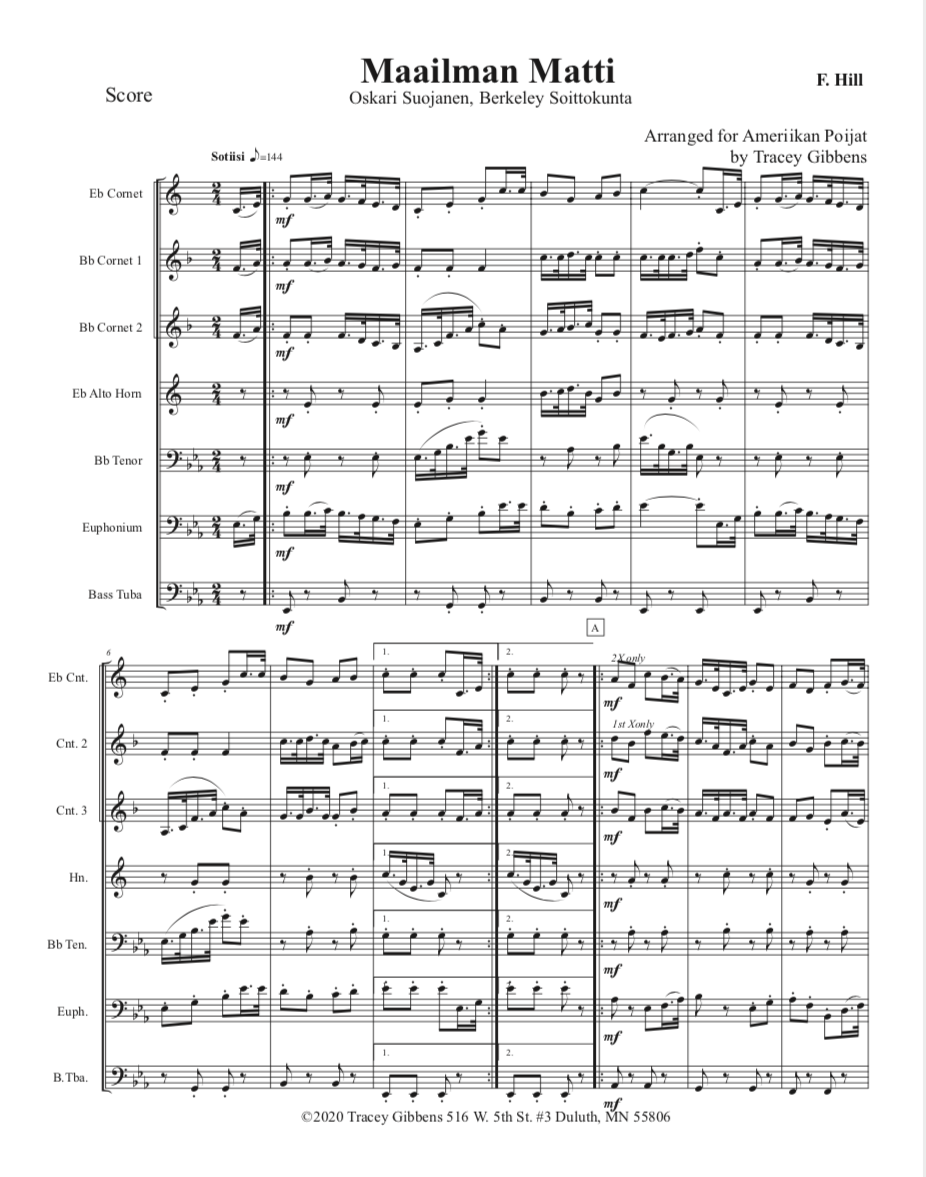
The tune is attributed to “F. Hill”- and based on an arrangement by Oskar Suojanen for the Berkeley Finnish Socialist Band.
All titles have been edited to contain the following parts:
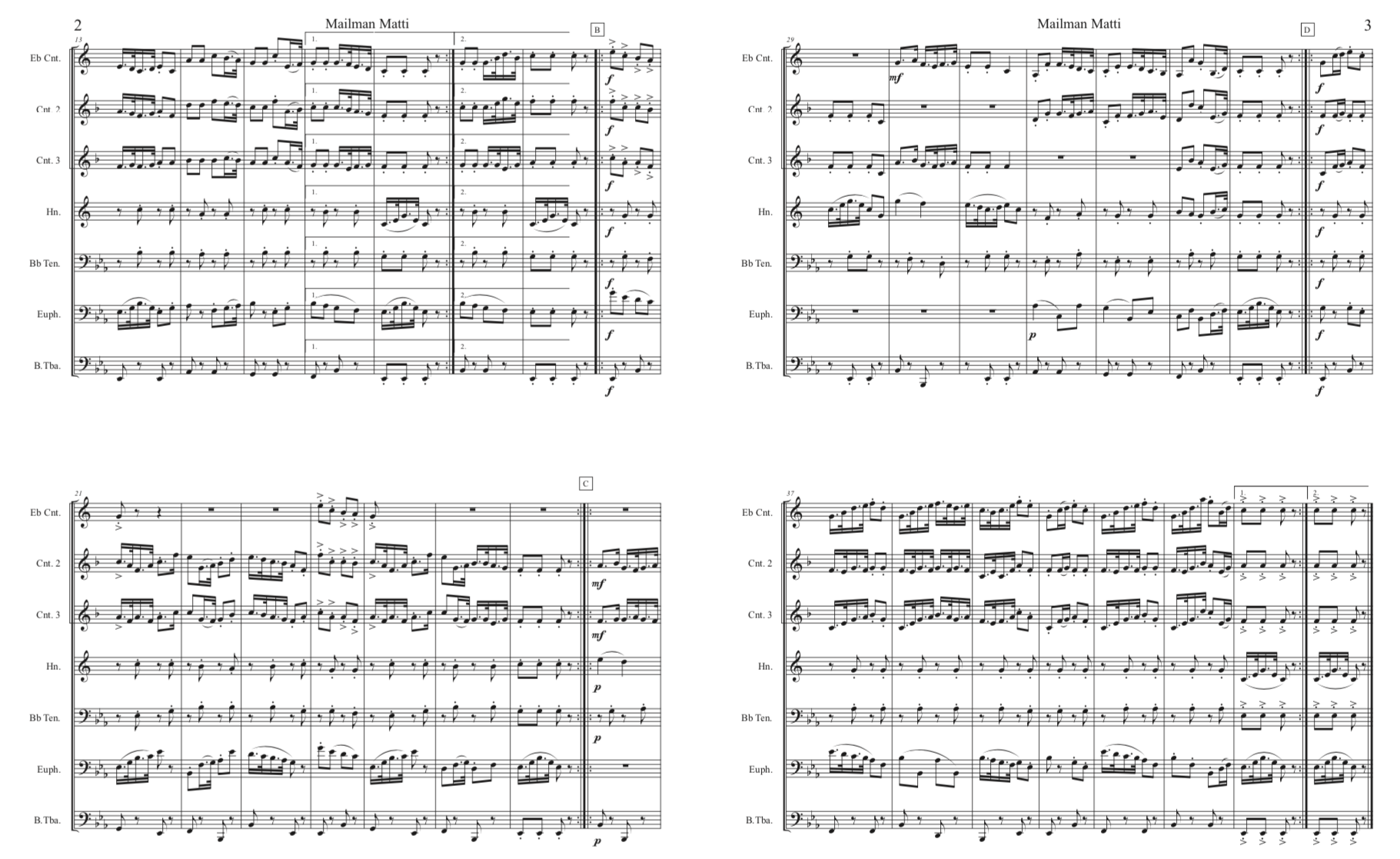
Standard Finnish septet : E-flat soprano cornet, B-flat cornet I, B-flat cornet II, E-flat alto, B-flat tenor , B-flat baritone, BB-tuba (concert pitch Bass Clef). Our wish is that brass players will try the conical brass instrumentation, but also welcome playing by mixed wind bands.
• Additional parts provided: Part 1 in Bb, Part 1 in C, Part 2 in C, Part 3 in C, Part 4 in F, Part 5 in Bb treble, Part 6 in Bb treble, Part 7 in Bb treble (for bass clarinet). This should provide most parts for a standard concert band. Only limited percussion is included, but could be added ad lib. Additional parts in other transpositions can be requested.
The Finnish Brass in America Series presents brass band music of immigrants and has not played in more than a century. This band sheet music was found in community band libraries and in archives in Hancock, Michigan- Virginia, Minnesota- Minneapolis, Minnesota – Conneaut, Ohio, and Fitchburg, Massachusetts. These compositions were coming from a much wider range of Finnish immigrant communities from coast to coast and reflect an intense activity during that time. The primary promoter of Finnish community music activity in the U.S. in the early 1900s was the Sibelius Club of Monessen, Pennsylvania. In cooperation with the HN White Music Company of nearby Cleveland, the Sibelius Club published many band pieces, some of which are included in this series. Several compositions are also from unpublished manuscripts.
The Finnish Brass in America Series is scored primarily for original Finnish brass septet: E flat Soprano Cornet, two B flat Cornets, an E flat Alto Horn, a B flat Tenor Horn, and Euphonium, and a Tuba. However, these sets also include alternate parts for flute (piccolo), clarinet, French horn, and tenor saxophone. The original seven parts can also be played by other instrumentalists who read those clefs and transpositions (tenor saxophone, bassoon, bass clarinet, etc.) While many of us in Ameriikan poijat have contributed arrangements to this series, it has been primarily of work of Tracey Gibbens, with editing by Russell Pesola and Paul Niemisto.
The Finnish brass septet (torviseitsikko in Finnish) has its roots in the late 19th century. The Finns that played in the army bands took their music and instruments home with them and formed brass bands in their home communities. These musicians had been trained in the army to play Russian, German, and authentic Finnish music. Many of them emigrated to America.
As the music developed in Finland over the years, the tango, cabaret music, and jazz added their influence to the Finnish septet arrangements. Traveling bands and recordings from other nations influenced the music of the brass septet--and also contributed to its eventual downfall. The septet tried to adapt to these new styles, but soon fell from popularity as jazz and the music of the accordion became more fashionable. By the end of the 1930's, the age of the torviseitsikko was over, and Finland was caught up in the jazz movement. In the 1990's, a revival of the brass septet began to place in Finland due to renewed interest in their own heritage during centennial years.
Ameriikan Poijat (Boys of America) is an ensemble of American brass players with an interest in Finnish heritage, playing traditional Finnish brass septet repertoire to American audiences and on international tours. Ameriikan Poijat had the honor to participate in events celebrating Finland's 75th Anniversary of independence in 1992 and has made four tours to Finland. Poijat is pleased to be representi


